AddThis

AddThis

Tuesday, 20 July 2010

Swatch Full-Blooded


Swatch has just released 3 new colours to bolster the already popular Full-Blooded range that was launched originally in 2007. The first run of Full-Blooded Chronographs featured the classic Black, Gold and Silver models that have stood the test of time and also the now discontinued Baby Blue and Pink models.

2009 saw the next wave of Full-Blooded watches, with the release of Sunset (deep red), Earth (brown), Green and Sea (Dark Blue) models, all of which priced at £89. Christmas 2009 heralded the launch of Full-Blooded white, retailing at £103.50 and now, the Summer of 2010 has welcomed Caramel, Raspberry and Blueberry to the collection, all selling for £103.50.

The new colours are a vibrant, on-trend addition to an eye catching selection, and their release will mark the end for some of the recent additions – Sea, Sunset and Green will fall out of the collection by the end of the year.

The watches all feature metal bracelets, with the original colours carrying steel straps and the newer models boasting light-weight aluminium. The cases are made from tough plastic diaphane and edged in trendy aluminium. As for features, no updates have been made. Every Full-Blooded watch features a three dial Chronograph that counts decimals, seconds and minutes up to one hour. There are no numerals to mark the time, only sparkly diamante studs. The date aperture appears between 8 and 9 o’clock and the tie-shaped hands are luminous.

One great and ostensibly underappreciated feature about these watches (as with all watches, but especially watches such as these where the main attraction is the colour options) is the interchangeable straps. This might sound obvious, but rather than buying every one of these vibrant timepieces, I purchased the Silver model and then bought all the other straps, which are easily changed at home using a pin to remove and hard surface to replace the strap. So now I can change in less than five minutes the look of my watch to match whatever outfit I choose to wear. The straps come at £20 each and so, for a total of £289 you have effectively 11 watches. You might not want or need every combination, but the black and brown are particularly useful to own so you can match your watch with most belt/shoe combinations. I also splashed-out and bought the Gold watch too so I could always wear a Full-blooded with my suits. I chose it as my everyday watch because of its affordability and, more than anything, comfort. The watch is supremely light and sits nicely on the wrist. Unlike most bracelet watches I have worn, the chunky links of this strap do not catch on your arm hair – an irritating side-effect of many metal watches.

And I must confess I couldn’t resist buying a third: the Earth model. The brown face looks remarkably good with a black strap (a combination I’m trying to bring kicking and screaming into fashion). A year ago, if I’d seen a man wearing brown shoes with a black suit I would have likely been sick on them, more so if they were brogues and that, as I’m sure you can imagine, is a quick way to ruin a pair of socks. But the men to whom I refer would have been wearing a black belt and a watch that had never been acquainted with the idea of coordination. But when black and brown is done with gusto it can be an edgy and industrial look. All Saints is one high street retailer that springs to mind where the missing of base colours, the combination of which usually sidestepped, is advocated.

All in all this is a top watch with a decent Chronograph function and a handily water resistant to 3 bar – a nice price, too, and definitely affordable for that low-end wear-watch for everyday activities. Don’t be too rough with it though as, with all Swatches, it has a Plexiglas face and does pick up scratches easily (these can be removed by a buffing machine at most jewellers as they are not covered in the 2 year guarantee).

And finally, if you’re feeling mega-creative, why not mix-up the links so you’re left with a chequered strap? I did this with my Black and Gold strap and get comments all the time. It’s a cheap statement and top quality watch from Swatch.

Rating: 8/10


Pick up THE HARE newspaper at Night and Day; Bar Centro; or Tiger Lounge in Manchester town centre, or the Oakwood in Glossop.

E-mail theharenewspaper@hotmail.co.uk with questions, comments or contributory pieces.

Monday, 19 July 2010

The Modernity of Sex...


Where have all the men’s men gone? Where is Marlon Brando; where is John Wayne; where is Oliver Reed? Sure, I know they’re all likely propping up a bar just a few minutes stagger from the pearly gates, being eyed-up by women and talking about motorcycles, whiskey and boxing-mitts, but where are their successors in Hollywood?
There’s a lot of acting talent out there. Brad Pitt is often underrated in lieu of his good looks and celebrity lifestyle; Jude Law is also superbly skilled, but is too seen as an object of desire, not of pure masculinity; Edward Norton is a fantastically subtle performer, but lacks the presence of the great men who are, for the most part, underrepresented on the silver screen.

It’s an old-fashioned notion that a man should be a man and that that is enough to cement him as an idol. But these six-packed, square-jawed, angel-faced hunks are, for all their lustful allure, a product of an increasingly androgynous society.
These men are prototypes of metrosexual perfection. They are beautiful in the same refined, calculated way women can be. And it is because of the emergence of greater social equality that they exist at all.

Go back to the fifties: men were men and women were women. This mode of existence caused a lot of problems in the real world, but there was also a lot of good in that era because of the stark distinction between the roles of the sexes. Oddly enough, the levelling-out of gender roles in society, which, in theory, should only be for the better, has eliminated a lot of common courtesies which there seems no way of regaining. Men used to respect women because they were somebody’s mother, sister or wife. Nowadays, women aren’t protected by those unspoken shields: they are fair game, and a lot of un-gentlemanly things are said and done because to be a gentleman in the old fashioned sense of the word is sometimes construed as sexist. Well, it probably is, but it’s also probably not a bad thing.

The worst thing about society’s increasingly homogenised treatment of the sexes is that it often seems to neglect one obvious point: men and women are different. They should have the same rights and opportunities, but there are certain things that should be considered when speaking to or about a man/woman that are distinguishable between the two.

It was only as recently as the eighties that true power-shifts began to come into effect. Women were, for the first time, given the shots they deserved in what had been a man’s world. But when this happened, boundaries not only drew closer, but overlapped. Women started wearing power-suits and men started wearing eye-liner. Girls had short hair; boys long. It seems that the coin has two sides which ever way up it lands.

And suddenly all the men’s men disappeared and were replaced by hairless, over-muscled, perma-tanned, g-string wearing Adonis lookalikes who, despite their bulging biceps and heroic features, lacked the rugged charm of yesteryear’s stars.
Okay, so here’s the rub: you look at Brando or Reed and you know they were bastards: old school, heavy-drinking, fist-fighting bastards who were probably awful to be around; all the more if you were wearing a skirt. They aren’t modern men, but they were men and are enduringly attractive for their solid frames, roguish smiles, misbehaviour and good hearts. They were the men that all guys wanted to be and all girls wanted to be with. They could protect you; they could drink you under the table; they could fix your fridge when it was on the blink; they were cool. As inappropriate as it may now be to champion these things on screen, their popularity has stood the test of time for a reason: they are idols from an age that had values. They may not have been gentlemen every hour of every day (much less every hour of the night) but they had respect: respect for each other and other people. But more than that; they were real.

None of them were conventionally good-looking, but they all had that special something that set them apart. It’s like comparing Nicole Kidman and Nigella Lawson. Kidman is almost certainly more categorically attractive: her face is angularly perfect; her figure svelte and toned; her smile brighter than Sirius. And yet Nigella, who carries a little more weight, has a bit of a funny nose and dresses/acts like your mum is, for most men, by far the more desirable. You admire Kidman; you obsess over Nigella, because you believe in her. She is real. And tastier than chocolate.

The closest we have and have had in this era are probably the evermore surprising Leonardo DiCaprio and the late Heath Ledger. Here are two realistic guys who you can identify with. Let’s not shun these idols of masculinity even if the notion of their existence is a bit outdated – their appeal will live on long after Brad’s washboard stomach goes soft, because deep down, men like to be men, or at least like to think they are.


Pick up THE HARE newspaper at Night and Day; Bar Centro; or Tiger Lounge in Manchester town centre, or the Oakwood in Glossop.

E-mail theharenewspaper@hotmail.co.uk with questions, comments or contributory pieces.

Sunday, 18 July 2010

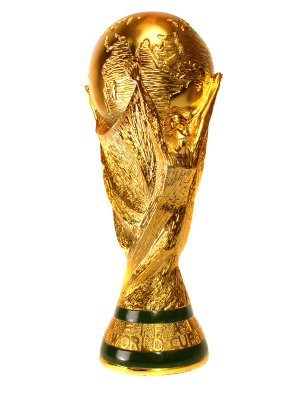
World Cup Round-up: 32-29...


With World Cup 2010 in the books, I’m going to spend the next few days (those of which that feature a dearth of current sporting news) analysing the performance of the teams in the reverse order of their final tournament standings. Who did well? Who underperformed? Who set the world stage alight and can expect to be rewarded come the start of next season?

Well, the first group up for analysis (places 32-29) might not have much to crow about, but there were flashes of optimism despite a thoroughly poor showing on all their parts.

32. Korea DPR
The North Koreans were not expected to do well at all. By that token, they lived up to expectations. Their first game saw them take away a fantastic 2-1 loss from Brazil. Losing is never great, but for this team of relative amateurs shipping a meagre brace to the No.1 team in the world and denying them a clean sheet was cause for optimism. They then followed up this invigorating start by having their asses handed to them by Portugal, who put an embarrassing 6 goals past them in the second half to run-out 7-0 winners – woeful. A 3-0 loss to the Ivory Coast left them bottom of the pile with a startling goal difference of -11. What’s next for these athletic, but unskilful players? Not much – their country’s policy on internalisation means few of these players will ever get the chance to hone their ‘talents’ in a better league. Don’t expect to see them back here in a hurry – they were outclassed on all fronts.

31. Cameroon
Expectations were high for the Indomitable Lions, but their wastefulness in front of goal let them down. They did find themselves in an awfully tricky group with Holland, Denmark and Japan, but they should have done better with a team that perennially performs well in their domestic cup of nations. Eto’o may not play another World Cup and there aren’t many young superstars coming through. Cameroon might not feature in the World Cup for a while now, thanks to the increasing competitively of the African teams.

30. Honduras
These guys did well to finish so highly. They too were in a tight group with Spain, Switzerland and Chile. By virtue of holding Spain’s fellers to a 0-0 draw, they not only denied the Europeans qualification, but proved they aren’t the jokes many thought they were. They only lost narrowly to the Chileans (1 goal) and even the Spanish (2 goals) – really not bad for a team almost guaranteed to lose three of three. They might struggle to get back to the WC finals due to the wealth of talent in their qualification zone and the sheer number of games that need to be navigated to assure progression. But the Hondurans can go home feeling okay about how they performed.

29. France
Almost undoubtedly the biggest disappointment of the finals. France were shit. With a host of talented players and a world class captain they failed to capitalise on a favourable group. One goal; one point; one ticket home. Domenech needed a single win to – amazingly – become France’s all-time winningest coach and he couldn’t even manage it in a group that contained three inferiror teams. Uruguay’s run to the Semis – by virtue of an easy draw and England’s failure to win their group – made them look better than they deserved, but nothing can paste over their poor form. Biggest post-WC transfer? Hand of Frog legend, Thierry Henry has signed for the New York Red Bulls. Wow. Sers.


Pick up THE HARE newspaper at Night and Day; Bar Centro; or Tiger Lounge in Manchester town centre, or the Oakwood in Glossop.

E-mail theharenewspaper@hotmail.co.uk with questions, comments or contributory pieces.
Saturday, 17 July 2010

Swatch You.Automatic Chronographs


August 1st sees the arrival of two new colour schemes for Swatch's current flagship watch, the Right Track You.Automatic. A Chronograph with a plastic diaphane body and Swiss made automatic movement the Right Track will now be available in no less than five colour schemes. Pictured above is the original Black and silver with red detailing, released 2009. January 2010 saw the release of the same watch but White with a silver bezel and Blue with a silver bezel. Neither new watch looks quite as sleek as the all black model, but the Blue is especially attractive (though I am biased - Navy is my favourite colour of this season).

But come August, the range will be bolstered by two additions in all black, one with yellow gold accenting (the Sunrise model) and another with Rose Gold highlights (the Sunset variation). I have to say that both are superb and much dressier than the original, which, thanks to its scarlet flashes, had a somewhat sporty feel. The Right Track Sunset is my personal favourite – black and rose gold are a real classic combination this season and when present in a watch look good with black trousers, shoes, tie and belt, a white shirt, navy blazer and rose gold belt buckle, cufflinks and tie tack. For dinner parties, team it with a black tux and bronze bow tie for a cool revamping of traditional colours.

All Swatch need to do now is release a brown and rose gold variation so all bases are covered for this, the warmest shade of precious metal. And it’s all happening at the right time too. As autumn approaches, these subdued colours are never more wearable.

As for functions, this watch sports a smart chronograph with second hand, 30 minute counter and 6 hour register, no numerals, a date window at 3 o’clock, a tachymeter around the non-rotating bezel and 5 minute increments printed in fine Arabic numerals around the inside of the face. The strap is crocodile effect leather (black on the Sunrise and Sunset models, and Blue or White on the respective January releases), and the buckles match the metal of the face.

All watches in this range carry a partially see-through case back so the finery of the interior can be viewed and appreciated. The power reserve is in the region of 46 hours when fully wound. The diaphane case makes this watch extremely lightweight and easy to wear for long periods and the decision to go with leather as the strap material pays dividends with its absorbency by keeping your wrist dry. All Right Tracks retail at £239 and are available from any Swatch store or www.swatch.co.uk.

All in all, the Right Track is a classy timepiece and a good Automatic from Swatch.

Rating: 8/10


Pick up THE HARE newspaper at Night and Day; Bar Centro; or Tiger Lounge in Manchester town centre, or the Oakwood in Glossop.

E-mail theharenewspaper@hotmail.co.uk with questions, comments or contributory pieces.

Friday, 16 July 2010

What is Europe's Role in a World Shaped by the USA and China..?


There is a Second World War memorial in the centre of my home town that I stop by and look at whenever I pass. Above the long lists of names of those who gave their lives in conflict to protect the life they swapped for the trenches, are the words Pro Patria – a stirring reminder of the honour attached to the defence of the small part of the world that belonged to the dead – it makes you proud, because you feel part of the successes and sacrifices of men and women like you. This feeling is, by necessity, a microcosmic phenomenon. The more localised the victory, the more personal it seems. But the last decade has seen an exponential acceleration of the globalisation of community due to the ever-shrinking boundaries of time and distance, leading to the obsolescence of such mutuality.
Europe is becoming a throwback to a time when people lived and died in one place. It is no surprise that communities expand and merge – it has been happening since early man struck stone on stone and saw in the resulting flames a future so great and terrible he should, had he been ruled by sense over greed, doused the fire and his own potential in favour of the simple life. And just a few hundred years ago, England itself was divided into many kingdoms. The absorption of culture into one cosmopolitan community has already seen hundreds of separate territories united – it is, after all, the only way to increase strength. But at what cost does such power come? Along the way, things must be discarded if total unification is to be achieved: languages must amalgamate; cultures must widen their horizons and expect dilution; prejudices must be laid aside, and leave in their place a new, fully-realised concept that is blander and more manageable than the sum of its constituent parts.
North America provided the expansionist Europeans with a clean slate, onto which they could write their own history. They walked onto that continent, took it for their own and, in doing so, erased the memory of their heterogeneous road to homogeny. The Americans were at once a race with a head-start. Now, as the youngest western nation, they are also the most powerful, while the Europeans look on across the Atlantic, wondering what role they are left to play in world governed by international powerhouses.
China is the world’s fastest developing country. Within its borders live one sixth of the world’s swelling population and amidst their ranks stands the largest army in the world – a fearsome three million strong.
A Gall-Peters map shows Europe to be not only incredibly small in comparison to the US and China, but sandwiched uncomfortably between the two: like a child rubbing shoulders with giants. And like a child, Europe is confused where the giants are decisive: slightly stupid and inconsiderate perhaps, but swift to act and strong enough to defend their mistakes. Europe’s continuing diversity is a beautiful thing, but it also makes it weak. It cannot project a united front that even comes close to the uniform outlook of China and the States, because of its internal disorder.
Continuing in this way is untenable for long-term survival, and so Europe is left with two options: either ally with one or the super-powers, or become a third contender. But both roads may prove dead-ends.
With so many ideas and ideals, Europe’s cultural complexity has seen it evolve into a hotbed for political diplomacy. Unfortunately, the EU is primarily a peace-corps with one fatal flaw: peace, ironically enough, can only be kept when those entrusted with its maintenance possess a legitimate military threat. As it stands, Europe is able to function as little more than a mediator. But words can not stop bullets and, in the case of war, Europe would be forced to support one super-power or the other – it cannot do both.
Conversely, Europe could strengthen itself by homogenising the continent. If boundaries could be stripped away; if France, Germany, Britain and all the rest became states, not countries; if government was centralised; if Europe was overseen by an omnipotent president, then maybe it could compete with the big-boys.
But how many moves would this course of action leave us away from the situation faced in George Orwell’s 1984? Three super-powers always at war: it would be naïve to think that any other eventuality can come of this. Three will become two and, eventually, what was many will become one.
Cruelly for Europe, whose diversity looks set for extinction, the step that follows worldwide unification will probably be a reversion to disparateness. By then, of course, all of what we know now will have been lost, but these things move in cycles and the demise of Europe and global diversity will eventually give rise to something new: the only question that remains is whether it will be built from steel, brick or bamboo.


Pick up THE HARE newspaper at Night and Day; Bar Centro; or Tiger Lounge in Manchester town centre, or the Oakwood in Glossop.

E-mail theharenewspaper@hotmail.co.uk with questions, comments or contributory pieces.

Thursday, 15 July 2010

Rory Roars...


Graeme McDowell's victory last month has inspired compatriot Rory McIlroy to card a stunning 63 (-9) in the opening round of the British Open. 63 equals the best ever score recorded on the first day of any major. To have earned such an accolade at the tender age of 21 is quite something, but it says more about the way St. Andrews is playing than it does about McIlroy's form.

The cut is looking like it could well be under par at this rate and, sitting in second place, John Daly at -5 might be in to repeat his 1995 victory. A topsy-turvy start on a course that was expected to throw-up some truly awful weather, this could turn out to be a great contest.

Early sufferers, like Tom Watson, who are ill-equipped to play this course in fine conditions due to short-range driving skills, may be able to weasel their way back into contention if a storm picks-up tomorrow. McIlroy is looking hot and has been the best of the bunch by some way, but bad weather could easily see him slide as drastically as he climbed today.

Woods is solid at -5 and will definitely be a factor come the close. McIlroy might be looking back on this week in ten years time as the week he came of age. With seven birdies and one eagle (shooting a magical -8 on the back 10) it's a dream come true already, but will he be able to find the consistency and bottle required to win a major? The rest of golf awaits the outcome of this fascinating tournament with eager anticipation.

Pick up THE HARE newspaper at Night and Day; Bar Centro; or Tiger Lounge in Manchester town centre, or the Oakwood in Glossop.

E-mail theharenewspaper@hotmail.co.uk with questions, comments or contributory pieces.

Wednesday, 14 July 2010

Conversation: the Art of Concealment and Charisma...


Firstly, I should apologise for the title. This is not a manual, a how-to guide or a lesson in the art of conversation. It is no more or less than my own personal observations that have, over the past 26 days of drunkenness, been highlighted and refined into something approaching a personal code by which I myself will endeavour to remember and live by.

Despite my breathtaking literary wizardry, I am not, nor have ever been, a professional writer. One day, when my personality and style has solidified to the extant that I might write a decent novel instead of the eight unedited manuscripts that clutter my desk, perhaps, but for now I am, would you believe a watch salesman – THE HARE is a project that I hope will catapult my name (pseudo as it is) to the attention of a sympathetic journalist who would be willing to take me under his or her wing. And contrary to vicious rumours designed with the sole intention of making me out to be some rough-necked Del Boy, I am yet to purchase a coat capable of concealing my many fairly-priced timepieces. Such an article would not sit well with my usually fastidious array, but may yet prove good for business. I ply my trade working for a well-known Swiss Watch brand whom I shouldn’t name for fear of bringing the company’s good reputation into question when the world realises that Switzerland’s most innovative horological institute would stoop to employing a chancer of my calibre.

It has been said in the past that I am a charmer; a silver-tongued fiend; and occasionally, and quite to my amusement, a bounder. All such assessments of my character have stemmed from the way I talk. I make the classic schmaltz of eighties Hollywood productions look Shakespearian in its execution. I smile a lot – too much, I think. I read body language and adjust my own accordingly. I am a snake, but, and I should say this now before you think ill of me, I am harmless; a toothless adder with no poisonous gland to his arsenal. I am not a playboy or a conman; I simply love to talk to people. I am also fortunate enough to be on the delivering end of a voice which, judging by various recordings I have heard, resembles a fog horn in its monotonic drone.

I read once that the human brain has three distinct sections of vocabulary. In layman’s terms they call them the reading, the writing and the speaking vocabularies. Simply put, there are a portion of words squirreled away in your brain that you can identify and understand when reading a text, a portion that you can produce yourself when given time when, for example, writing at your own pace, and an easily accessible portion that you use to speak and delineate your intentions to another. These sections decrease in size from former to latter. For example, you might see the word ostensibly in a book and know from previous experience what it means, but when talking to someone, you’d likely use a more common synonym like apparently. This isn’t to say that one sounds better than the other, it’s just the maintenance of such elevated lexical choice is necessary to pull off what would otherwise sound like the repetition of a word or phase not your own.

What I have noticed is that the difference between my vocabulary sets is less than might be considered normal. This leads me sound like anything from an erudite lecturer to a jumped up little prick who has enough pretension to lay claim the foundation of the ‘Emo’ fad. What you are reading now is effectively a stream of consciousness. If I was talking to you about this same subject, it would sound almost exactly the same as it reads. I always thought that talking in such a way makes me sound like a bit of a twat – and it probably does – but last week, while out with a close female friend of mine who talks in a less flowery manner, she commented that my style of fast-pace babbling was one of the reasons why she enjoyed talking to me.

“It’s interesting,” she said after a bottle of wine. “I never know what you’re gonna come out with next. We could talk about the same thing all night and it would sound different.”
I mumbled something throwaway in that sort of false humility that rather than dissuade a flurry of compliments from ensuing, subtly (though bloody obviously) encourages the kind words to continue.
“It’s because you can express yourself. You know how you feel and you describe it better than most people. You might sound like a fairy most of the time, but it’s entertaining at least.”

I was ecstatic with this assessment. Fairy or not, I was at least interesting to some degree, and not the complete tit that I had assumed many took me for.
But the real foundations of my current verbal dexterity are knowledge and practice. Never does a day go by when I don’t try to talk at length about something I have just learnt or experienced. Without an in depth analysis of everything I go through, I would be unable to recollect the relevant information at a late date, thus wasting the experience.

I am also obsessed with knowledge. Without knowledge the hope of entertaining conversation is lessened. Sure, there are plenty of fun and interesting discussions to be had on the analysis of feelings and thoughts on certain philosophical and political matters, but without reference points; without back-up or the awareness of what has gone before, the topic will eventually run dry. Opinion is engaging, but without foundation it is trite and wears thin quickly. But I have plenty of flaws. I am still young – only 24 as I write this article – and I still have all the potential and pretension of men my age. I am a wide-eyed idealist and I’m sure this shows through in the way I talk. I am naïve, but aware of it. I relish my inexperience and seek out those who might be able to make me better at what I enjoy doing. I’ve received many a clip round the ear for youthful impertinence, but just as many impressed nods when my ramblings strike a chord with the older and wiser men whom I seek to impress and emulate.

My boss the other day offered me a piece of advice that resonated:

“You know a lot about watches – more than anyone I’ve ever worked with, but the customers…well, they don’t always need to know what you know or that you know so much.”
“So I should…cut it back a bit?”
“You need to be selective. You see the opportunities to break off at a tangent too easily, and once you get going you find it hard to stop.”
“So I should say less…less is more.”
“Relevance is everything.”
And she was right. Knowing loads is great, but releasing that knowledge into conversation at the right time is a skill I am yet to master. I have my good days and my bad, but I am trying to get better; to become more interesting, more considerate – a better listener.

That is the crux of it all: listen, digest and spin. The aim is to perpetuate enthusiasm and keep things fresh. The less you talk, the more power you have in conversation: you can guide the discourse; you can shape your ideas and comments around the topic rather than inundate your dance-partner with unnecessary information. Hold back, be selective, be creative and smile, damn it. If you ever find yourself saying something cheesy, the only way to carry it off is with gusto: power through your own ridiculousness with a self-assured bent that would put the most misguided politician to shame. It’ll work, and if it doesn’t, come and talk to me about it.


Pick up THE HARE newspaper at Night and Day; Bar Centro; or Tiger Lounge in Manchester town centre, or the Oakwood in Glossop.

E-mail theharenewspaper@hotmail.co.uk with questions, comments or contributory pieces.